
OSHA Fines Following Fatal Dairy Incident Highlight Ongoing Safety Gaps in Agriculture
March 6, 2026
Six workers died last summer after being exposed to hydrogen sulfide gas at a dairy near Keenesburg, Colorado. OSHA’s investigation revealed serious safety failures, but the tragedy also highlights broader regulatory gaps that continue to leave agricultural workers without protections.
Last week, the U.S. Department of Labor’s Occupational Safety and Health Administration (OSHA) announced the results of the investigation into the deaths of six workers at Prospect Valley Dairy near Keenesburg, Colorado. OSHA proposed $246,609 in penalties against three companies for the severe failures to protect workers in the hazardous environment created by industrial dairies. According to the investigation, a pipe in the manure management system disconnected, releasing manure water and hydrogen sulfide. The pump room quickly filled with the suffocating gas, overcoming the two employees inside and the additional four employees who attempted to rescue their coworkers. OSHA found that all three companies failed to provide proper training to employees that potentially could have prevented this horrible tragedy.
OSHA’s proposed fines offer little comfort to the families who lost their loved ones on August 20, 2025 when performing supposedly routine maintenance work. The tragedy highlights important issues related to workplace safety protections in agriculture. Hydrogen sulfide and other known hazards are tightly regulated in other industries, while agricultural workers remain explicitly excluded from those protections. In order to protect the health and safety of workers, OSHA requires other industries to test air quality, provide specialized training and personal protective equipment, and prepare worker rescue plans before work begins. If these standards were followed in Colorado’s dairies, it is possible that six lives could have been saved.

Describe your image

Describe your image

Describe your image
Describe your image
Describe your image
Describe your image
Describe your image
Describe your image
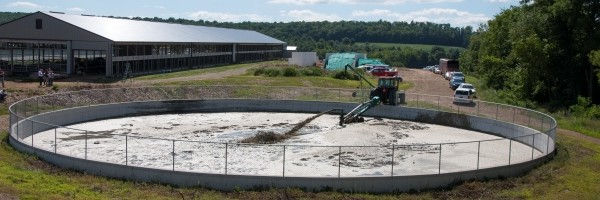
Photo Credit: Mike Platek https://ohsonline.com/articles/2014/12/01/agricultural-safety.aspx
Unfortunately, Colorado relies entirely on federal OSHA and cannot address gaps like this through our own occupational safety and health program. States have the option to operate OSHA-approved “state plans” that could allow Colorado to adopt and enforce workplace safety regulations that are at least as strong as federal standards, while still being tailored to the needs of local industries. For example, California regulates confined spaces in a way that does not exclude agricultural workers and requires employers to evaluate the hazards and implement safety procedures to protect the lives of workers. Without a state plan, Colorado cannot close the many regulatory gaps that put the lives of agricultural workers at risk.
The tragedy at Prospect Valley Dairy is not an isolated reminder of the dangers agricultural workers face. In 2021, dairy worker Juan Panzo Temoxtle died after the manure vacuum truck he was operating fell into a manure pit at a dairy in Weld County. That incident involved a different hazard, but it reflected the same reality of workers operating around industrial manure systems and other dangerous infrastructure without adequate protections. More recently, another Colorado worker died after being exposed to hydrogen sulfide gas at a sugar beet processing facility in Fort Morgan. Again, OSHA found serious violations, but the violating company was only required to pay less than $60,000 of an initial penalty of $168,227. Each of these incidents occurred in very different workplaces, yet they share a common thread. Workers in Colorado’s food production system encountered hazardous environments where failures or gaps in safety protections quickly became fatal.
These tragedies must drive a broader conversation about the deficiencies in the current framework for protecting the workers who form the backbone of Colorado’s food systems. The workers who died near Keenesburg were performing essential labor that helps sustain Colorado’s food system. Across the state, agricultural workers milk cows, process crops, and maintain the infrastructure that keeps food production moving every day of the year. Many of these workers are immigrants who contribute enormously to Colorado’s rural economy while often facing the most dangerous working conditions. Hazards such as hydrogen sulfide exposure and confined spaces are well understood and preventable when proper safety procedures are in place. Ensuring that these protections reach the agricultural workforce is critical to preventing future tragedies. Project Protect will continue working alongside agricultural workers and their families to advocate for safer workplaces, connect workers with resources, and support communities when accidents occur.
If you have questions or you want to support our work, please contact Hunter Knapp at hunter@projectprotectfoodsystems.org.
Describe your image
Describe your image
Describe your image
Describe your image
Describe your image
Describe your image
Describe your image
Describe your image
Describe your image
Describe your image
Describe your image
Describe your image